
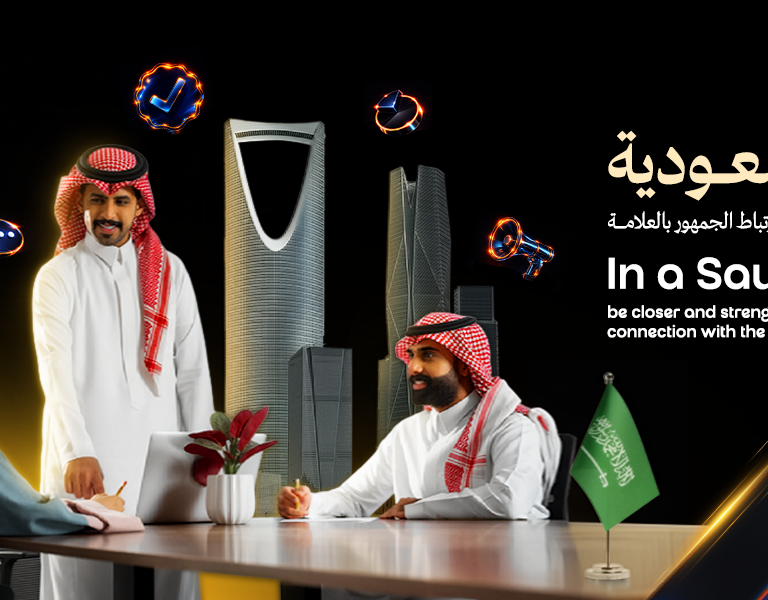
As the Saudi market continues to grow, the demand for content localization
has increased. Today, effective communication calls for a tone that reflects local culture and values in marketing and media messaging.
Recent studies indicate that integrating the Saudi dialect into advertising can strengthen the bond between consumers and brands. It makes communication feel more relatable and engaging, while also raising the standard for brands to develop a tone of voice that resonates more authentically with local culture.
However, much of the content seen in the market still relies on generic language that lacks cultural sensitivity. Today’s writers, whether Saudi or non-Saudi, are seeking practical frameworks to develop marketing content that respects the Kingdom’s cultural diversity, as this is exactly what gives one brand a stronger presence than another.
This article provides a clear roadmap for developing a Saudi brand tone, one that helps you read the local context, and understand the difference between what works and what misses the mark.
Understanding Identity and Diversity
Saudi audiences are culturally diverse and speak a range of dialects. Their values are centered around a rich Islamic heritage and Bedouin traditions. That’s why speaking in one general tone will disconnect you from people’s interests.
A brand’s tone must feel national in spirit and flexible in expression.Cultural differences across the Kingdom are clear, with Hijaz, Najd, the South, the East, and the North each carrying distinct social characteristics. For that reason, understanding the local context of each region is an essential part of crafting effective marketing messages.
Today, content needs to combine cultural roots and the future vision of the company. The brands that succeed are the ones that understand how to merge the two.
MSA and “White Dialect” in Marketing Content
Many content professionals believe that Modern Standard Arabic alone is no longer enough for every context. While it still dominates institutional communication, marketing and digital content often require a more flexible tone that feels closer to the audience.
This is where “white dialect” comes in: a style that blends simplified MSA with widely understood colloquial expressions. It helps brands stay clear and professional while sounding more natural and relatable.
For example, IKEA adopted this approach in parts of its advertising and social media content, combining standard Arabic with light colloquial phrasing. This made the brand feel closer to consumers and more relevant to their everyday lives.
How can content reflect the spirit of the Kingdom?
National identity has become a valuable creative lens for brands aiming to build stronger local relevance. Campaigns tied to moments such as Founding Day, Saudi National Day, and Hajj season can create a stronger cultural connection, but their impact depends on more than timing alone. What matters is how well the content translates these occasions
Tools like cultural calendars help brands use these moments more thoughtfully. Lahamim Creative Communication’s 2026 calendar, for example, highlights national and international occasions as opportunities for engagement. It also draws attention to lesser-known regions of the Kingdom, showing how content can reflect local spirit while serving a clear communication purpose.
Global brands with a local tone
Many global brands have adapted their tone to better fit the Saudi context, keeping their core brand strategy consistent while localizing language and expression.
McDonald’s Saudi Arabia, for example, launched its 2023 campaign “Yalla McDonald’s.. say it with your eyebrows,”using a playful local gesture to express excitement for food. The campaign gained wide attention because it tapped into a familiar cultural cue in a fresh and memorable way.
Coca-Cola Saudi Arabia took a similar approach for Saudi National Day 95 in 2025, redesigning its classic cans in green and white under the theme “Proud of Who We Are.” The campaign framed the brand’s local presence through national symbolism, reinforcing its connection to the Kingdom and its culture.
Practical Steps to Build a Saudi Brand Tone
- Reflect Local Culture and Needs
Analyze core values such as hospitality, family bonds, and traditions to ensure content is respectful and relevant to Saudi audiences.
- Define a Consistent Brand Persona
Avoid abrupt shifts in tone. If the White Dialect fits your brand persona, maintain it across all channels to build long-term loyalty.
- Leverage Linguistic Contrast
Strategically mix dialects. Start an advertisement with a dramatic scene in a local dialect to capture attention, then switch to the White Dialect or MSA to explain product benefits.
- Local Validation
Before launching a major campaign, consult Saudi experts or review community feedback to ensure cultural and linguistic accuracy.
- Utilize Local Lexicons
Use resources such as dictionaries or colloquial Arabic/ slang references to diversify vocabulary and ensure content sounds natural rather than translated.
Common Mistakes to Avoid in Saudi Marketing Content
- Do not rely on literal translations of global campaigns without considering the cultural context.
- Do not use overly formal or complex language on social media platforms.
- Do not use a dialect outside its natural regional context, as this often leads to a narrow or inaccurate representation of society despite its diversity.
- Do not import cultural templates from another country and apply them to Saudi society.
- Do not imitate the style of other brands without a clear identity of your own.