
World Cup 2026: a football tournament, an advertising space, or economic influence?
48 teams for the first time, and 104 matches in 16 cities across three countries. This report reads the tournament through advertising, brands and influence: who pays, who shows up without paying, and why Saudi Arabia invests in it.
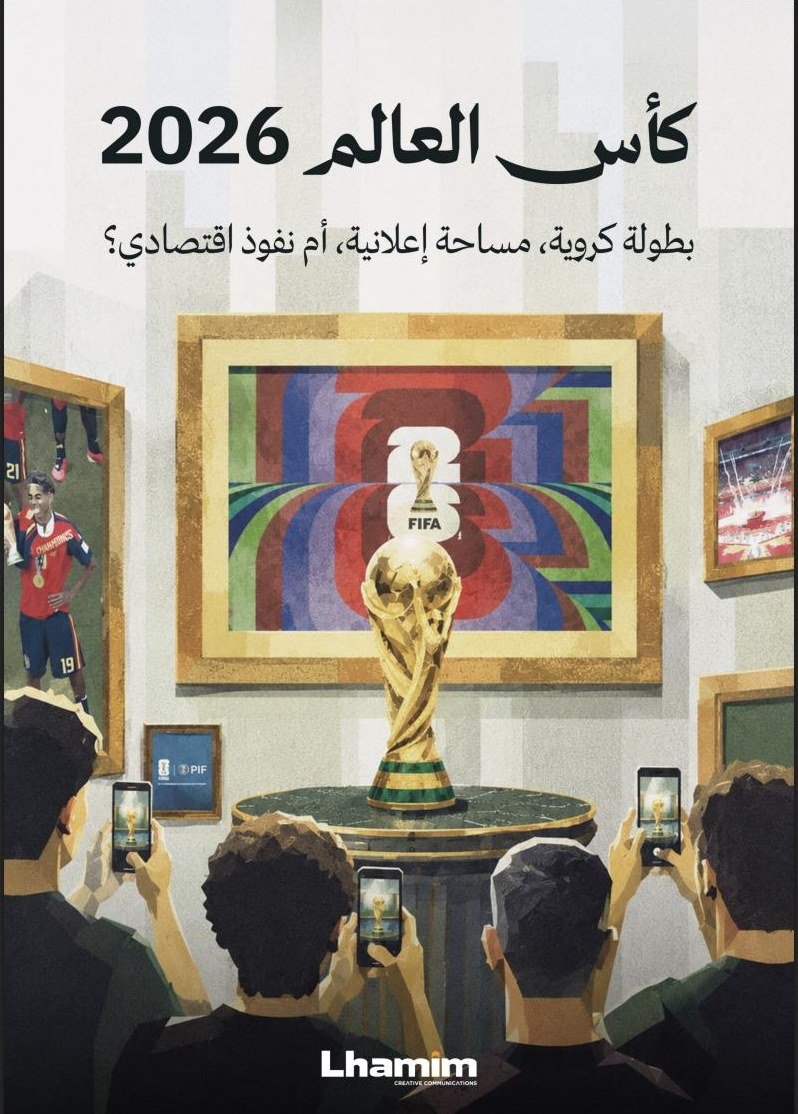
- $13bnexpected FIFA revenue for the cycle
- 6bnexpected viewers worldwide
- $3.9bntelevision broadcast rights
- $400MAramco's partnership over four years
Figures as stated in the report.
The scale of the event
48 teams and 104 matches
In 16 host cities across 3 countries.
USD 40.9 billion
Expected impact on North America's GDP.
USD 871 million
Prize money for participating teams.
Advertising during play
For the first time in World Cup history, commercial ads are shown on television during playing time, through hydration breaks. The idea began during the pandemic as a break to protect players, then became a marketing opportunity: 624 minutes of stoppage across 104 matches could bring in USD 500 million.
Many fans, however, see football as a game built on continuity, and the change frustrated traditional supporters.
Ambush marketing: presence without sponsorship
FIFA requires that no non-sponsor brand appears during matches. Levi's, which holds the naming rights to one of the stadiums, covered its logo in white and temporarily changed its digital identity. Images of the cover-up spread widely and became better known than any paid ad. Gillette hid its name with white foam tied to its product.
Rexona, by contrast, sponsored the tournament and placed its logo on the substitution and added-time board. The takeaway: some brands paid millions, and others gained presence for less.
Saudi Arabia at the tournament
The Public Investment Fund
Announced on 14 May 2026 that it joined as an official supporter of the tournament in North America and Asia, with Savvy Games Group and Qiddiya City.
Aramco
A major partner in energy at a cost of USD 400 million over four years, aimed at repositioning the brand and opening the door to partnerships.
Part of Vision 2030
The Kingdom hosts the 2027 Asian Cup, Expo 2030 Riyadh and the 2034 World Cup, and aims to raise sport's share of GDP from 1.5% to 3%.
What this means for your organisation
Sponsorship is not the only route
A smart idea can create more presence than official sponsorship, provided it respects the rules.
Big sponsorship has goals beyond sales
Aramco does not sell to consumers, yet it bought an image and a meeting room. Define the goal before the budget.
Prepare for 2034 now
The tournaments coming to the Kingdom are a communications opportunity for entities and companies, and preparation starts years ahead.
Browse the report (Arabic)
Questions and answers
How much revenue is FIFA expected to make from the 2026 World Cup?
USD 13 billion for the cycle according to the report, including USD 3.9 billion in television broadcast rights.
What is PIF's role in the 2026 World Cup?
The Public Investment Fund announced on 14 May 2026 that it joined as an official supporter in North America and Asia, with two of its portfolio companies, Savvy Games Group and Qiddiya City.
Why does Aramco sponsor the World Cup?
According to the report, to reposition the brand from an oil company to an energy company, open the door to strategic partnerships and build global name recognition.
What is ambush marketing?
When a non-sponsor brand gains presence around a major event without paying for sponsorship rights, as happened when Levi's covered its logo at the stadium.
Who wrote this report?
Lhamim, as part of Lhamim Insight, a series of reports that read major campaigns and events from a communications and marketing angle. Lhamim is a Saudi communications and media agency based in Riyadh.
Is the full report available in English?
The full PDF is in Arabic. This page covers its main findings in English, and our team can walk you through it.