
Marketing and trend obsession: how it affects brand image
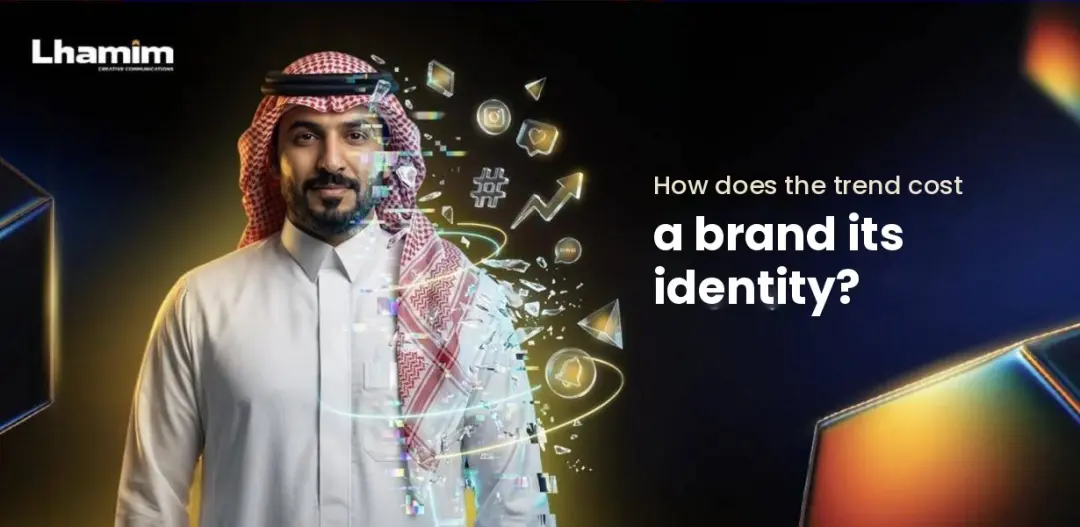
In recent years the nature of marketing has changed considerably, and brands no longer rely only on traditional campaigns or direct advertising messages to reach their audience. With the rapid development of digital platforms, the speed of reacting to events and trending topics has become a basic element of modern marketing. Today a short clip, a simple idea or a challenge spreading on social media can become, within hours, the talk of millions of users around the world, and that has pushed many brands to try to use these moments to achieve as much reach and engagement as possible.
In the middle of this acceleration, a clear problem has appeared in digital marketing: some brands have moved from using the trend as an intelligent tool for communicating with the audience to a constant obsession with chasing whatever is popular, even when it has nothing to do with their identity or the nature of their message.
What is brand image?
The danger lies in the fact that audiences today treat brands as entities with a personality, a voice and clear values. Every action or piece of content a brand produces contributes directly to the image it holds in people's minds. This is where the sensitive relationship between trend chasing and brand image appears, because the careless use of trends can create negative impressions that are hard to change later.
Brand image is built gradually through every experience the audience has with the brand. The way it speaks, its design style, the kind of messages it sends, how it deals with different issues and even the type of humour in its content are all elements that shape how the audience sees it. For this reason, chasing trends at random can create a contradiction in the brand's personality and leave the audience unable to understand its real identity or what it actually stands for.
Why have brands become obsessed with trends?
The problem is that many brands have come to see the trend as a guaranteed route to fast reach, especially given the intense competition for attention on digital platforms. With many modern marketing strategies built on fast numbers such as views, engagement rates and shares, marketing teams are under constant pressure to produce content that achieves instant reach, even at the expense of building a coherent, long-term identity.
This is where the brand gradually begins to lose its balance, because it moves from making content that expresses it to making content that satisfies platform algorithms only. A brand that runs after every trend becomes a prisoner of the idea of constant visibility, whatever the quality of that visibility or its connection to its core message.
How does trend obsession lead to a loss of identity?
Although trends can give brands a great opportunity to be seen, the real problem appears when taking part in the trend becomes a goal in itself and not a means that serves the brand's core message. We often see brands entering trends that have nothing to do with their business, or using language completely different from their usual style only to attract attention.
This kind of content may achieve high numbers in the short term, but it creates confusion in the audience, because the brand appears to be changing its personality constantly to fit whatever wave is passing. Over time the audience becomes less able to form a real attachment to the brand, because its identity is no longer clear or stable.
The audience always remembers what a brand says and the way it says it. When that way differs greatly from one trend to the next, the brand image begins to erode. The brand may then look as if it lacks authenticity, or is trying to imitate others instead of having a personality of its own.
When the trend becomes a threat to credibility
The matter becomes more sensitive when brands try to use comic or sarcastic trends in a way that does not suit the field they work in. There is a difference between a youth brand that relies on lightness and spontaneity in its communication and a brand working in a sector that requires a high degree of seriousness and trust, such as finance, health or education.
In many cases, the inappropriate use of a trend costs part of the brand's credibility, because the audience feels the brand is trying to appear in an artificial form that does not resemble it. The danger of chasing trends can also extend to damaging audience trust.
At a time when news and opinions spread at great speed, a careless reaction to a sensitive trend or a controversial issue can lead to large waves of criticism. Some brands make the mistake of exploiting humanitarian events or social issues to generate engagement, which creates a negative impression and makes the brand look as if it is pursuing numbers by any means possible.
Today's audience is more aware than before
It is important to understand that the audience has become more aware than before and is no longer easily drawn to content whose only aim is reach. Users today can tell the difference between a brand that uses a trend intelligently to serve its message and a brand that joins anything simply out of fear of disappearing.
For this reason, authenticity has become an extremely important element in building brand image. Even if a trend can attract attention for a few moments, what keeps the audience following the brand is the feeling that it has a real personality and a clear position.
Alongside looking for content that is funny or spreads fast, the audience is also looking for brands it understands and trusts, and that it feels speak for it or add real value. Brands that build their relationship with the audience on clear foundations are therefore better able to last than those that rely only on temporary waves.
When is using a trend smart and effective?
Despite all these challenges, using trends cannot be considered negative in absolute terms. On the contrary, a trend can be a highly effective tool if it is used in a considered way that fits the brand's identity. Successful brands know when to take part, how to take part and, most importantly, why they are taking part at all.
When the trend is connected to the nature of the brand or can add real value for the audience, using it can strengthen the brand's presence and bring it closer to its followers. Some brands succeed in using a trend in a way that looks natural and unforced, because they add their own touch instead of simply copying what everyone else is doing.
This is the real difference between a brand that uses the trend as a tool within a clear strategy and a brand that lets the trend lead its entire identity.
The difference between fast reach and a strong brand image
One of the biggest modern marketing mistakes is the belief that high engagement necessarily means real success. A piece of content may achieve millions of views within a few days and leave no real mark on the audience's relationship with the brand.
Fast reach may give the brand more room to be seen, but it does not guarantee trust, loyalty or a long-term connection with the audience. Some content that relies only on trends may also attract an audience that has no interest in the brand or its services, which makes that engagement temporary and without real effect.
By contrast, a brand may achieve a deeper effect through content that spreads less but is more consistent with its identity and message. The real value lies in the kind of impression that remains with the audience after the content has ended.
How do brands balance trend and identity?
Achieving a balance between keeping up with trends and protecting identity requires awareness and a clear strategy. The brand first needs to understand its own personality precisely before thinking about joining any trend. It must know how it speaks, which values it represents and what kind of content really suits its audience.
Trends must also be chosen according to how closely they relate to the brand. Not everything that achieves high views suits every brand, and sometimes ignoring a trend is smarter than joining it.
Strong brands do not feel the need to appear in every passing wave, because they understand that building a stable brand image matters far more than achieving momentary reach that may vanish within days.
In the end, the trend has become a part of modern marketing that cannot be ignored, but the problem begins when it turns into an obsession that costs the brand its identity and balance. The relationship between the trend and brand image is a very sensitive one: intelligent use can strengthen the brand's presence and bring it closer to the audience, while random use can damage credibility and distort the overall impression.
Trends and the reputation of government entities and large companies
The larger the entity, the higher the cost of a mistake. A careless contribution to a trend may pass without effect on the account of a small shop, but on the account of an official entity or a listed company it becomes news, and may require a clarification or an apology.
This is why mature entities deal with trends through a written rule, not a judgement made in the moment. They define in advance the kinds of topics they take part in, who holds the decision to take part, and which topics they will not approach however widely they spread. Before any contribution they ask four questions:
- Does the trend have a direct connection to the entity's field or services?
- Does it fit the entity's voice and standing?
- Could it be read in a way that offends a group of the audience?
- Could we defend this contribution if we were asked about it a month from now?
If the answer to any one of them is not reassuring, letting the trend pass is better for the entity's reputation than catching up with it.
Conclusion
As audience awareness grows, authenticity, consistency and clarity have become more important than simply catching up with whatever is popular. A trend may give a brand a few minutes of attention, but it will not give it a real place in the audience's mind unless it has a clear identity and real value that deserve to last.
More articles
- 18 March 2026
Content localization: building a tone that speaks to the Saudi audience
- 8 June 2026
Between the lines: implicit messages for effective communication with the Saudi audience
- 6 October 2026
Influencer marketing trends in Saudi Arabia