
After National Day 96: how brands spoke about the nation in the language of its people
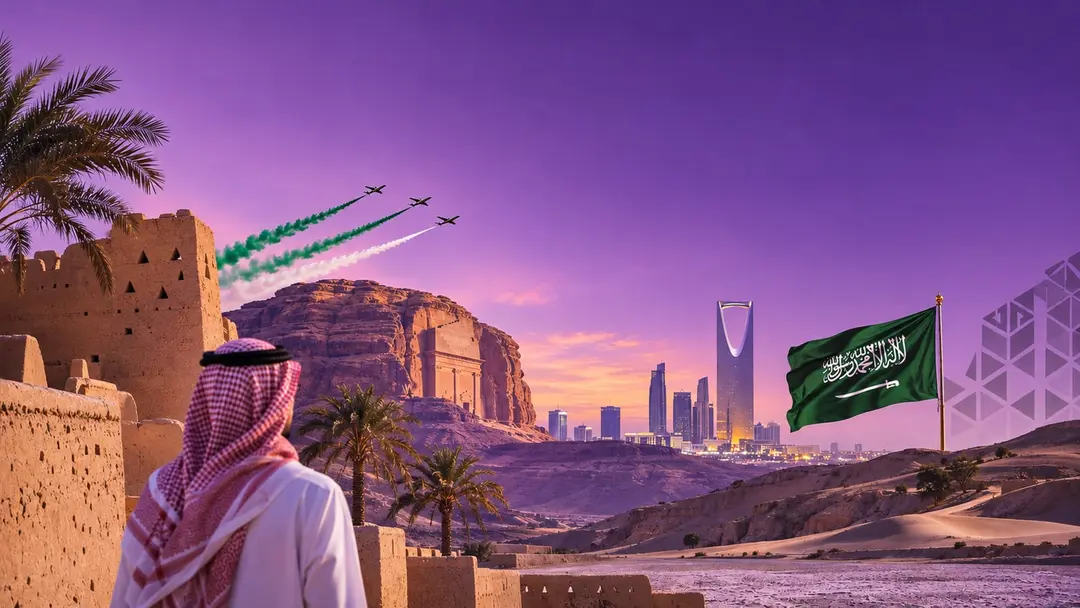
Advertising campaigns for the 96th Saudi National Day differed in how brands chose to speak about Saudi Arabia. Some came close to the way its people talk, in language that sounds like their everyday conversations and tells what they live. Others went back to the memory of place, using phrases that do more than explain what a nation means and reach for what the land has left in the identity of its people.
Other campaigns carried the vocabulary of ambition, dreams and vision, describing a nation that does not stop achieving and looks to the future with optimism.
With the occasion over, one question remains: which campaigns found creative language strong enough to stay with people?
How brands found their words
The official identity for the day carried the same theme for the second year running, a theme that roughly translates as our pride is in our nature. It places the character of Saudi society at the centre of communications, celebrating what Saudis achieve every day through that character: courage in hard moments, generosity in giving, determination in work, and an authenticity rooted across generations.
But having the identity in a brand's designs was not enough to give each campaign its own language. Some brands simply used the official logo next to their own. Others looked into the meaning of those traits for words that could express the nation and, at the same time, say something about what they do.
Nupco, the medical supply company, found in determination a way to describe its work. Its campaign asked why the Saudi does not sleep, showing staff working through the night and supplies reaching hospitals, and answered that he does not sleep because his dream does not sleep.
The Saudi Contractors Authority summed up love of country in three words: whoever loves her builds her. The short line carries two meanings at once, building the nation in practice and expressing affection through work.
In both examples, National Day appears in the brand's words as a natural extension of the character of Saudi citizens. The language we use to talk about the nation already exists in the identity of its people.
Metaphors everyone recognizes
One of the notable shifts in the language of national advertising was that some campaigns left traditional patriotic phrases for more local vocabulary, expressions that can hold a society's culture, customs and traditions in a single ad.
Campaigns drew on familiar phrases from everyday speech, the kind used to welcome a guest or to promise that something will be taken care of. These words carry the Saudi dialect and, with it, social situations and meanings rooted in daily life. When a delivery brand uses an expression that means consider it done, it makes trust and responsibility part of a commercial identity the audience recognizes long after the campaign ends.
When the memory of a place becomes the language of an ad
It is easy to film the mountains and valleys of the Kingdom's regions. But land has a memory that holds people's footsteps, the stories tied to them and the crafts that grew there. A simple shot of a familiar place can be enough to wake a whole feeling of belonging. When advertising calls on that memory, place becomes part of the language in which the nation is spoken.
That is what happened in Mobily's ad, built on the idea of an affection that is never cut off. The land returned to the sound of a well-known poem by the late Prince Badr bin Abdulmohsen, turning place into shared memory and belonging into a lasting love.
Reassurance as a shared language
Since the early days of the Saudi state, stability has been tied to unity and protection, until safety became part of how people relate to their land and a feeling present in daily life. In that context a single word can sum up what speeches cannot. It is said by those who stand in a position of protection, received by people as a message of reassurance, and then repeated in their own voices.
Shawarmer's National Day ad called on the strength of the Kingdom through a patriotic song about courage and steadfastness, taking Mount Tuwaiq as a symbol of solidity. The message reflects pride in the nation's strength and its ability to protect its land and its people.
King Salman International Airport reflected safety through everyday life. Its ad opened with the sound of alarms, then moved to scenes of people going about their day as normal. Between the sound of the alarm and the sound of life, the message becomes clear: the voice of the nation rises above every alarm.
How a brand keeps its own language
Every brand has a language its audience is used to and a personality formed over years of communication. A national occasion is a different kind of test: how can a brand say something about Saudi Arabia without sounding as if it has borrowed a language that does not suit it?
A telecom company does not need to retell the history of the Kingdom's unification, and a transport company does not need to speak of the glory of battles. The first knows what closeness and connection mean, and the second knows distance and roads. Each has something to say about the nation from its own work.
What set brands apart on National Day was the ability to express the nation in a language that does not feel foreign to them and that a competitor cannot repeat. That is what creates a distinctiveness worthy of both the occasion and the brand, and a story that stays in people's minds after the day has passed.
And when words are not enough
After all these ads that tried to find the right words for Saudi Arabia, Saudi Vision 2030's own National Day campaign summed up the scene with one idea: a nation that words are not enough for, and cannot do justice to.
Perhaps the paradox is this. Every brand tried to say something about the nation in its own way, and the best thing they all implicitly agreed on is that words, however eloquent, will never be enough.
More articles
- 18 March 2026
Content localization: building a tone that speaks to the Saudi audience
- 8 June 2026
Between the lines: implicit messages for effective communication with the Saudi audience
- 6 October 2026
Influencer marketing trends in Saudi Arabia